


Alumni Interviews
[Vol.03] Yutaro Otake
Background
Left Tokyo Metropolitan Sogo Geijutsu (Comprehensive Arts) High School, Department of Fine Arts
Entered University of the Arts London, Central Saint Martins, Foundation Diploma in Art and Design
(University of the Arts London, Central Saint Martins, Foundation Diploma in Art and Design)
Now 18
At GAJYUKU: from age 4 (first year of preschool, November 2007) to 2nd year of junior high (March 2018) — about 10 years
— We spoke with Yutaro, who attended GAJYUKU through junior high.
Here we share things you’d never hear in class, and a candid look at one of our alumni.
Yutaro is now studying at University of the Arts London. Before leaving for the UK, he also taught younger students as an assistant instructor at GAJYUKU.
We asked him about his time at GAJYUKU and his hopes now.
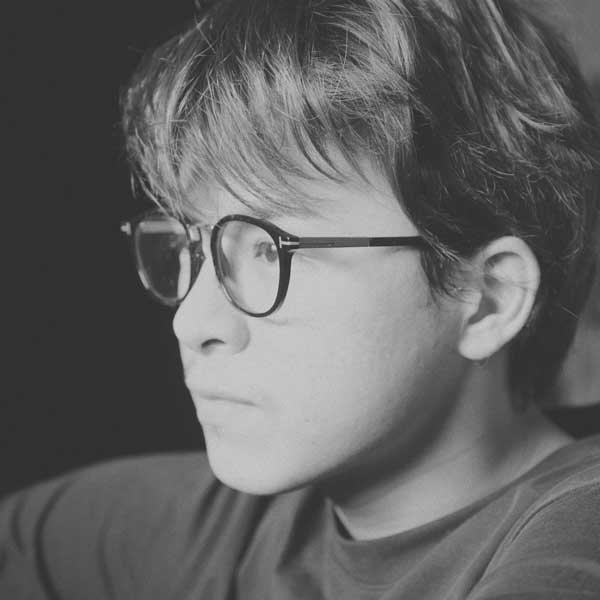
Impressions of GAJYUKU
— GAJYUKU was right there for Yutaro from before he could remember (from the first year of preschool), and he naturally kept coming. What were his impressions of GAJYUKU, and what was he like back then?
Q What kind of school was GAJYUKU Art School for Children?
A Basically, it was a place where I could work freely and do what I wanted.
Q As a child, did you also make art outside GAJYUKU lessons?
And what kind of pictures did you draw?
A Yes, I made things. I think I drew a lot. Things like Dalí.
Q Dalí?! How old were you then?
A About 3rd grade of elementary school.
We had art books at home, and when I was home alone I’d look through them for ages, wondering why anyone would paint pictures like these. I think that was probably the first thing that led me down this path. There was a Dalí book among them, and I came to love Dalí-like paintings.
Q Did you copy Dalí’s paintings?
A Not copying — I just liked drawing surreal kinds of pictures.
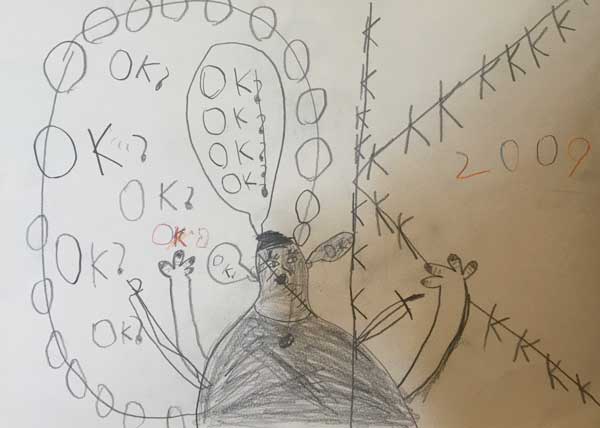 Work drawn as a child
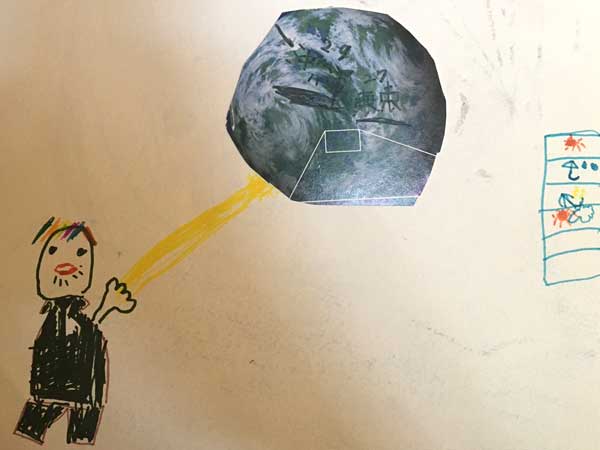 Work drawn as a child
Q How did you want to make art, and did GAJYUKU suit that?
A I didn’t really have a particular way I wanted to work. But I didn’t like being told what to do, so in that sense it was a free school, and I think it suited me.
Q In today’s learning systems — remote learning and so on — environments are designed so that choosing for yourself whether to study has meaning… What’s the appeal, the advantage, of going to a studio?
A I don’t think GAJYUKU lessons would work remotely. Being allowed to make a mess, and so on…
With more people working from home, you often find you can’t concentrate at home.
Having your environment changed, half by force, can flip a switch. When you come to GAJYUKU, you get making done.
The biggest lesson
— Good things about joining GAJYUKU, and fun memories
Q What were your happy or fun memories at GAJYUKU?
A I loved drawing, so just that (being able to draw) made me happy and was fun.
Q Is there anything you’re glad GAJYUKU was there for?
It can be about now (as work), too. (Yutaro worked as an assistant instructor until July.)
A I don’t remember much from when I was little, but working as an assistant now, I find it really interesting.
As you grow up, you need a reason for everything — and I envy the children who move their brushes without any of that. I do sometimes think now that I wish I could work like that too.
Q What were your struggles in making art (art class, arts & crafts)?
A What I understand now is — as I said, children can draw purely, but as they get older they rush toward drawing what they see realistically. I think that’s partly the responsibility of adults.
That’s something I struggled with, or still struggle with: whether it really needs to be realistic.
I think when a child draws an apple, for example, they’re not drawing a real apple — they’re drawing an apple in a picture.
The apple can be blue, green or yellow — any color is fine, any shape is fine. As people grow up, that gradually disappears. Even as someone who teaches, it’s something I’m struggling with now.
Q Don’t you often teach children to “look more closely and draw”?
A From my experience, I think looking more closely and drawing is better from around high school age.
My father taught me realism-like methods and told me to do them, but there was a time when I could hardly draw at all. So I think it’s best to draw freely at first — the sea can be red, it can be black — and then, at the next stage, once you simply feel that painting is fun, to look and draw.
His works then and now
— Works he made while at GAJYUKU.
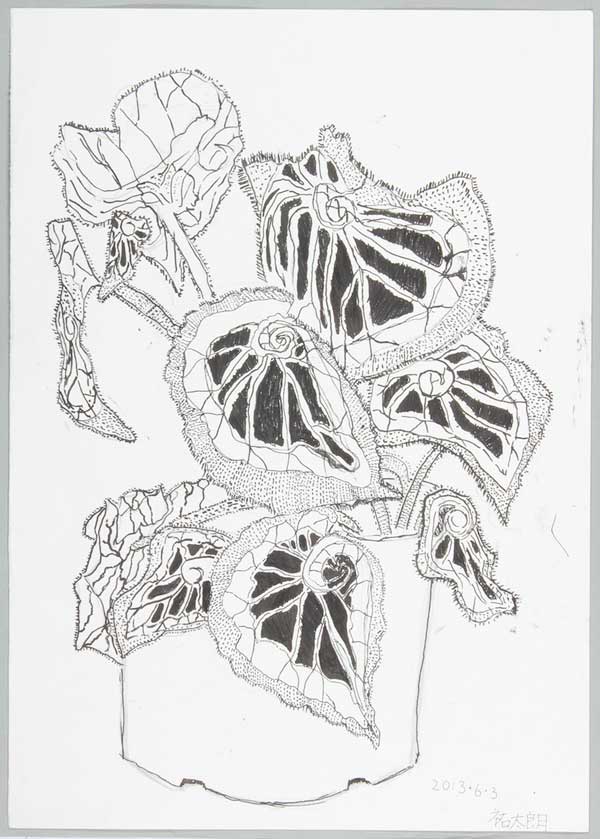 Work: Detailed drawing (2013) — pen on drawing paper
Yutaro: Oh, that takes me back. I remember drawing this.
But I get bored really easily, so I drew one leaf and kind of felt “that’s enough”… but… I did draw it properly, didn’t I (lol)
Q You really did draw it properly. How did you manage to finish it?
A Probably because I got a push (from my teacher at the time) ^^
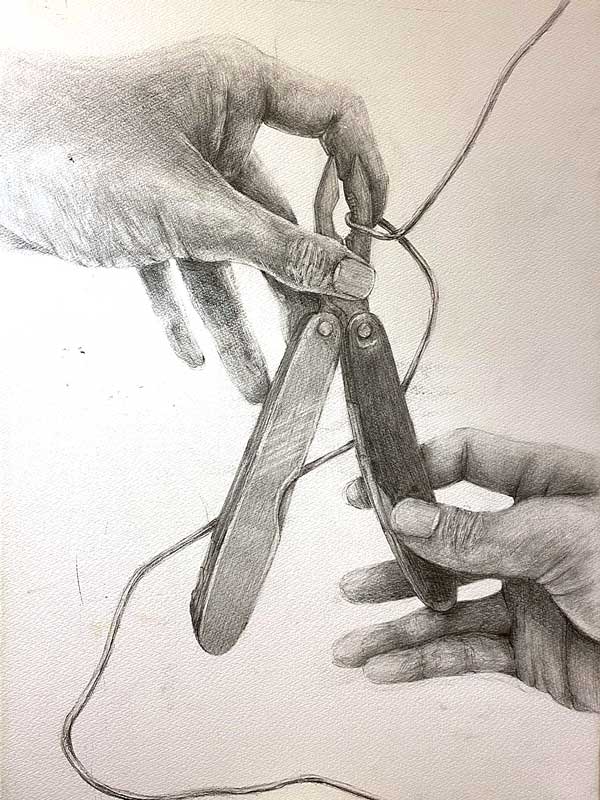 Work: Assignment drawn at Sogo Geijutsu High School (age 16) — pencil on drawing paper
— Works he is making now.
Yutaro held a solo exhibition in August.
Dates: August 24–29, 2021. Venue: ROOM_412 (Room 412, Takagi Bldg., 15-8 Sakuragaoka-cho, Shibuya-ku, Tokyo)
Both the works and the artist’s ideas are fascinating.
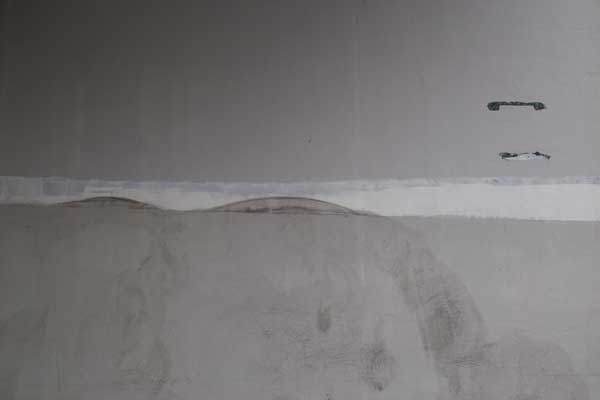 Work: “Beyond Good and Evil (working title)” (from “The Absence of the Artist”) series
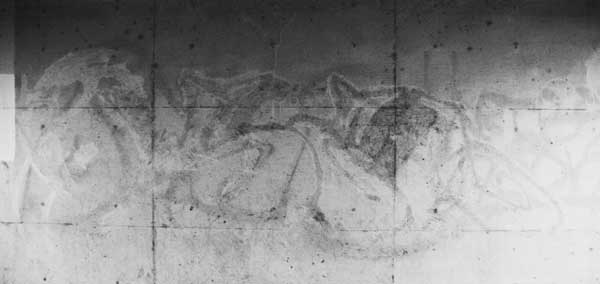 Work: “Beyond Good and Evil (working title)” (from “The Absence of the Artist”) series
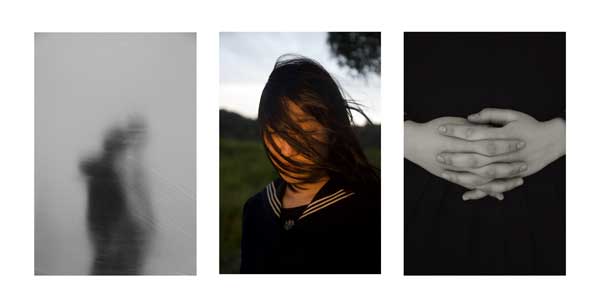 Photographic work
Looking ahead
Q What do you want to do at university?
A I want to taste once more the joy of drawing freely, like a child. That’s not just about university — it’s for my whole life.
London is a true center of art, so of course I very much want to experience that, and on that kind of stage I want to make work while really valuing my background of having been born in Japan.
Q What are you doing to prepare? Any ideas about what you’d like to make?
A I think I’ll decide what to make once I’m there. But while I’m in Japan, I want to learn about Japan, so I’ve been doing research.
I went to meet the creative director of a homeware brand I love.
He’s one of Japan’s top designers in the graphic design world. He had an exhibition, and I won a lottery to have him explain it in person at the venue, so I went.
He really is amazing. He values his Japanese background enormously, and I really admire that.
Q What would you like to do in the future?
A I sort of know you can’t make a living as an artist alone, so I’m not thinking of reviving Japanese art or anything, but what I’ve felt while teaching children is that I simply want them to enjoy moving a brush. And I think Japan is a bit lacking in places where people who want to learn art can learn it properly, so I’d like to create something like a complex that brings those kinds of places together in one.
If people in creative jobs, art students… well, anyone really, gathered there, I think something interesting would happen.
It’s very vague, but that’s what I’m thinking.
Q Is it still at the vague stage?
A …Yes… it would cost a huge amount of money, so it would be great if it happened — and I really feel like I’d love to ask, say, the designer whose exhibition I just went to for a little help.
Q Please give a message to younger students.
(A message for children thinking of joining GAJYUKU)
A The younger students are still small, so I have a message for parents considering GAJYUKU. For children, I think drawing and making are the same as sport.
Taking the paint out of the bag, squeezing it from the tube onto the paper, moving the paint around on the paper — that movement itself feels great. For children.
So I really think it doesn’t matter what they draw. They can make as much mess as they like — I just want them to feel that drawing is fun.
As for the quality of the work — well, that’s a tricky one, but I think it’s better not to ask too much of that.
If it isn’t fun, they can’t get interested, can they?
— I see.
We felt that he is already thinking about children through art, and even about those children’s futures and the future of art.
It may sound a little exaggerated, but knowing there are young people who feel this way reassured us that the future of art in Japan is in good hands.
Thank you so much for sharing your story with us today.